Charlotte Personal Injury Attorney Matthew R. Arnold of Arnold & Smith, PLLC answers the question “What can you sue for in a personal injury case?”
Automakers continue to incorporate newer and more sophisticated technology into vehicles, the goal being to make driving easier. Though some of the changes are certainly beneficial (better seatbelts, safer airbags, blind spot warning technology, etc.) others can have serious consequences if used incorrectly. One seemingly benign advancement which has proven to be deadly in some particularly tragic circumstances is the keyless ignition system that now appears in the vast majority of new vehicles.
Matthew R. Arnold of Arnold & Smith, PLLC answers the question ” I have been injured on another person’s property. What should I do now?”
Those NASCAR fans who stayed awake into the early morning hours of July 6th to catch the conclusion of the Coke Zero 400 at Daytona International Speedway witnessed Austin Dillon’s horrific last-lap crash. Dillon’s No. 3 car went airborne into the track’s “catch fence” and broke into pieces, sending debris flying towards fans seated near the finish line. Amazingly, Dillon emerged from the car with only a bruised forearm and tailbone, and of the 13 spectators hit by debris, only one was taken to the hospital (and that spectator has since been released).
Matthew R. Arnold of Arnold & Smith, PLLC answers the question “If I am injured in a car accident or at work what should I do?”
When a personal-injury claimant’s case is turned down by a lawyer or law firm because the value of the claim is too low, the claimant has three choices. The claimant can not file a claim at all, can handle the claim on one’s own, or her or she can contract with a so-called “settlement mill” to resolve the claim.
Charlotte Personal Injury Attorney Matthew R. Arnold of Arnold & Smith, PLLC answers the question “Should I trust the insurance adjuster?”
Damages are the dirty little secret in personal injury lawsuits—at least the typical insurance adjuster wants you to feel that way. Sure, the adjuster tells you, the driver who hit you was at fault and his insurance policy covered the accident, but what did you really lose?
Matthew R. Arnold of Arnold & Smith, PLLC answers the question ” I have been injured on another person’s property. What should I do now?”
Legal bills have made the business of “Punkin Chunkin” uncertain, but Punkin Chunkin president Ricky Nietubicz said he is committed to holding the annual pumpkin-flinging event at Dover Motorsports, Inc. in the State of Delaware’s capital.
Charlotte Personal Injury Attorney Matthew R. Arnold of Arnold & Smith, PLLC answers the question “What exactly is a wrongful death claim?”
Woman causes husband’s death, sues herself for negligence, wins, then pays herself the money. If one believes the headline, it is true. A closer look reveals the headline is only partially true.
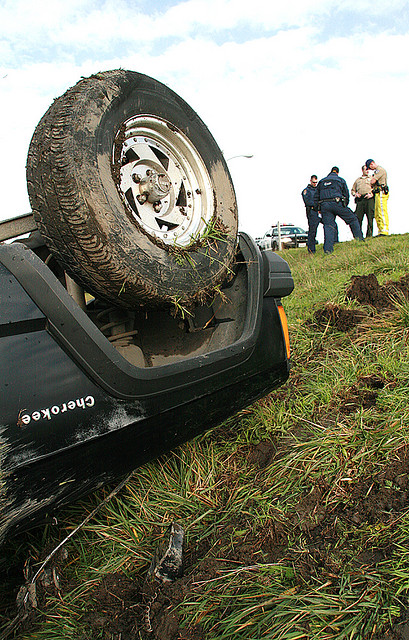
On December 27, 2011, Barbara Bagley lost control of the vehicle she was driving in a Nevada desert and struck a sagebrush, causing her car to flip over. Her husband, who was a passenger in the vehicle, passed away nearly two weeks later as a result of injuries sustained in the crash.
Bagley became the personal representative of her late husband’s estate, meaning she is the person empowered by law to collect her late husband’s assets, pay claims of his creditors, and distribute proceeds of the estate to heirs.
Part of the assets of an estate—depending on the state in which one resides—are proceeds from claims that were filed or may have been filed before or after a person’s death.
Charlotte Personal Injury Attorney Matthew R. Arnold of Arnold & Smith, PLLC answers the question “What if a loved one dies from the injuries sustained in a serious accident while the case is pending?”
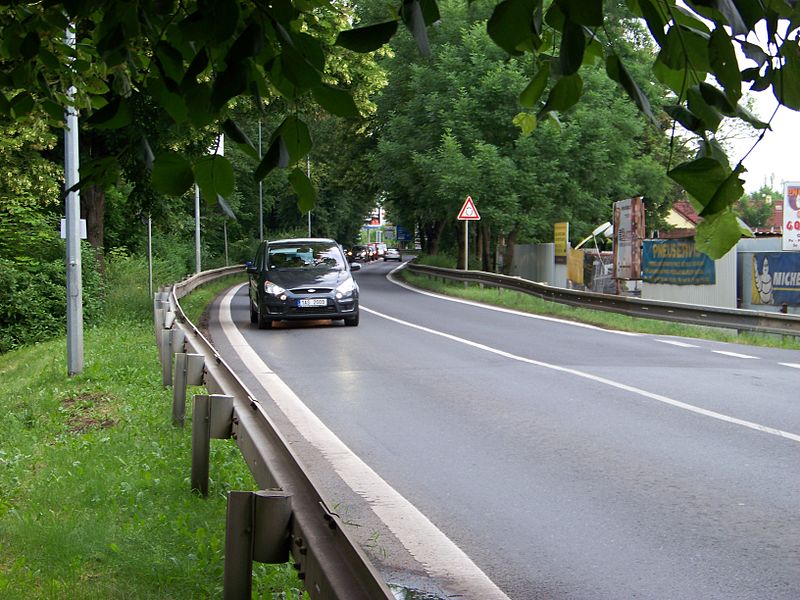
State officials have rebuffed calls to stop installing guardrails that activists say have caused dozens of deaths and injuries in accidents across the United States. California became the 41st state to ban the guardrails this week after a Texas jury levied a mammoth fraud verdict against the company that makes the guardrails.
The North Carolina Department of Transportation is aware of safety concerns raised about the ET-Plus end terminals, but the agency said it is leaving the decision of whether to pull the terminals from state highways to federal officials.
NCDOT spokesman Steve Abbott said his department has not seen any evidence of the end terminals’ danger, despite its awareness of “a couple of incidents.”
On Wednesday, federal regulators approved new safety testing of the end terminals. The NCDOT said it will await the results of new safety testing before making a decision on removing the terminals.
Even if the agency does decide to remove ET-Plus end terminals that have already been installed, it has not kept a database of the locations of the terminals. The state has installed different types of guardrails in different locations throughout the state, and the NCDOT has not kept track of which guardrails are where.
Charlotte Personal Injury Attorney Matthew R. Arnold of Arnold & Smith, PLLC answers the question ” Is a tractor-trailer accident the same as an automobile accident?”
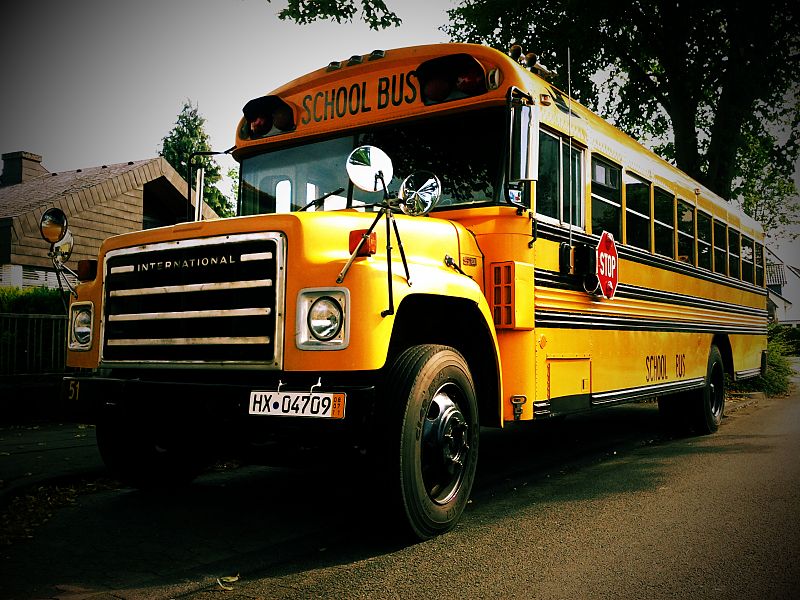
A storage compartment door on a Gaston County school bus opened suddenly on Wednesday, causing the school bus to overturn and injuring some 23 middle-school aged students.
State troopers who responded to the scene told WSOC that they did not think the bus was travelling the posted 45-mile-per-hour speed limit at the time of the crash. As of Thursday, the school-bus driver had not been cited, and troopers were mum on whether any charges were expected.
A student interviewed by WSOC said “he heard a loud squeaking noise coming from the bus right before the accident happened.”
One student said the last thing he remembered was a lot of people tumbling over him.
The driver of the school bus said she tried to close the storage compartment door and started to run off the road. The driver overcorrected, causing the school bus to flip on its side. Eleven students were taken to CaroMont Regional Health Center in Gastonia; four were taken to Carolinas Medical Center in Kings Mountain, and another eight were taken to local hospitals by their parents.
Charlotte Personal Injury Attorney Matthew R. Arnold of Arnold & Smith, PLLC answers the question “What if the accident was my fault?”
A spate of recent tragic incidents shows the dangers posed by motor vehicles do not end when we park them—or when we think we have parked them.
A tragic accident involving a “parked” vehicle took the life of a well-known New York realtor this past Saturday.
Realtor Jennifer Feuerman died on Saturday evening after she got out of her 2012 Mercedes Benz outside a house she had listed on Bowditch Lane in Center Moriches. Center Moriches is on Long Island, to the east of New York City.
Feuerman evidently left the vehicle running and forgot to shift the transmission to “Park.” The vehicle backed over Feuerman and pinned her under the driver’s side door, Suffolk County police reported. Feuerman, aged 50, was pronounced dead at the scene. Police impounded the Mercedes in order to conduct a safety inspection.
Also on Saturday, a 79-year-old woman in City, Idaho became trapped under her own car when it slid backward as she tried to get out. A 17-year-old boy who saw the incident tried to assist the woman, but police said the car pushed both the boy and the woman across the road and over an embankment, pinning them both under the driver’s side door. The woman suffered significant injuries, while the boy was able to free himself and summon help.
Charlotte Personal Injury Attorney Matthew R. Arnold of Arnold & Smith, PLLC answers the question ” Is a tractor-trailer accident the same as an automobile accident?”
Motor vehicles and the virtually unfettered freedom of movement throughout the United States they have afforded have become staples of American life over the past century.
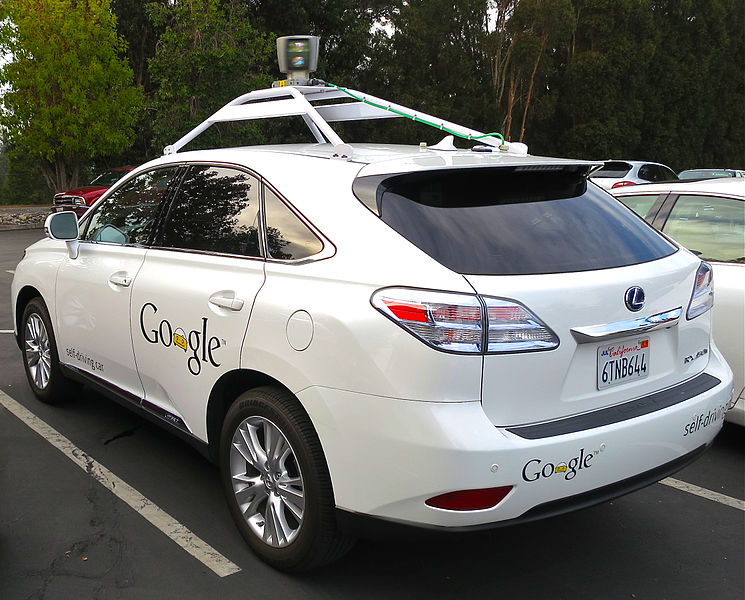
Those staples are not likely to disappear anytime soon, but if technology giant Google, Inc. has its way, the manner in which many people move around the country in motor vehicles may be in for a drastic change.
The company recently announced that it had developed a “fully functional” prototype of a self-driving car. It is now seeking corporate partners in the automobile industry to bring self-driving cars to market within the next five years.
New York personal injury lawyer Eric Turkewitz said the self-driving cars will have the ability to “see the other cars/pedestrians and slow down or stop despite the driver being lost in thought elsewhere. Or drunk. Or asleep…” As Turkewitz notes, the self-driving car software automatically slows or stops the car when it senses an impending collision. Turkewitz thinks the software may lessen or eliminate crashes caused by human error. As a consequence, the number of crashes will be reduced and, Turkewitz speculated, less people will die or be injured in car crashes each year. That will lower insurance premiums for drivers and may reduce the number of personal injury lawsuits brought by claimants injured in car crashes. That would mean, in theory, less work for personal injury attorneys.
 Charlotte Injury Lawyers Blog