Charlotte Personal Injury Attorney Matthew R. Arnold of Arnold & Smith, PLLC answers the question “The insurance adjuster is saying I am partially negligent what does that mean?”
Bloomington, Illinois-based State Farm Fire & Casualty Co. bills itself as a company full of people who have a passion for carrying out the company’s mission of being a good neighbor.
Charlotte Personal Injury Attorney Matthew R. Arnold of Arnold & Smith, PLLC answers the question “The insurance adjuster is saying I am partially negligent what does that mean?”
The failure by the mother of a little-league softball player to allege that an area recreation district owed her a duty has led to the dismissal of her lawsuit. The judge that dismissed the lawsuit—Circuit Judge Barbara Crowder—left the door open, however, for the woman to bring the suit again.
Charlotte Personal Injury Attorney Matthew R. Arnold of Arnold & Smith, PLLC answers the question “What exactly is a wrongful death claim?”
Woman causes husband’s death, sues herself for negligence, wins, then pays herself the money. If one believes the headline, it is true. A closer look reveals the headline is only partially true.
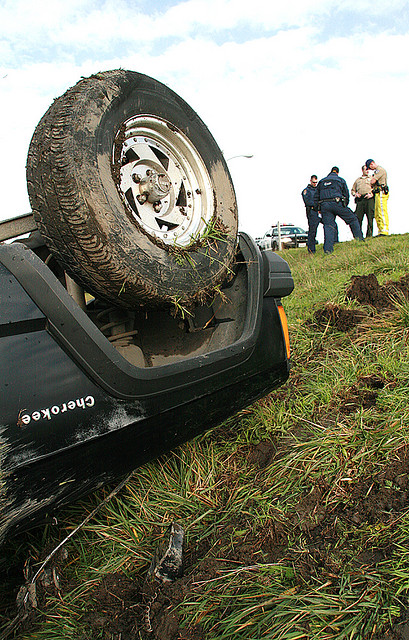
On December 27, 2011, Barbara Bagley lost control of the vehicle she was driving in a Nevada desert and struck a sagebrush, causing her car to flip over. Her husband, who was a passenger in the vehicle, passed away nearly two weeks later as a result of injuries sustained in the crash.
Bagley became the personal representative of her late husband’s estate, meaning she is the person empowered by law to collect her late husband’s assets, pay claims of his creditors, and distribute proceeds of the estate to heirs.
Part of the assets of an estate—depending on the state in which one resides—are proceeds from claims that were filed or may have been filed before or after a person’s death.
Charlotte Personal Injury Attorney Matthew R. Arnold of Arnold & Smith, PLLC answers the question ” Is a tractor-trailer accident the same as an automobile accident?”
Motor vehicles and the virtually unfettered freedom of movement throughout the United States they have afforded have become staples of American life over the past century.
Those staples are not likely to disappear anytime soon, but if technology giant Google, Inc. has its way, the manner in which many people move around the country in motor vehicles may be in for a drastic change.
The company recently announced that it had developed a “fully functional” prototype of a self-driving car. It is now seeking corporate partners in the automobile industry to bring self-driving cars to market within the next five years.
New York personal injury lawyer Eric Turkewitz said the self-driving cars will have the ability to “see the other cars/pedestrians and slow down or stop despite the driver being lost in thought elsewhere. Or drunk. Or asleep…” As Turkewitz notes, the self-driving car software automatically slows or stops the car when it senses an impending collision. Turkewitz thinks the software may lessen or eliminate crashes caused by human error. As a consequence, the number of crashes will be reduced and, Turkewitz speculated, less people will die or be injured in car crashes each year. That will lower insurance premiums for drivers and may reduce the number of personal injury lawsuits brought by claimants injured in car crashes. That would mean, in theory, less work for personal injury attorneys.
Charlotte Personal Injury Attorney Matthew R. Arnold of Arnold & Smith, PLLC answers the question “What if a loved one dies from the injuries sustained in a serious accident while the case is pending?”
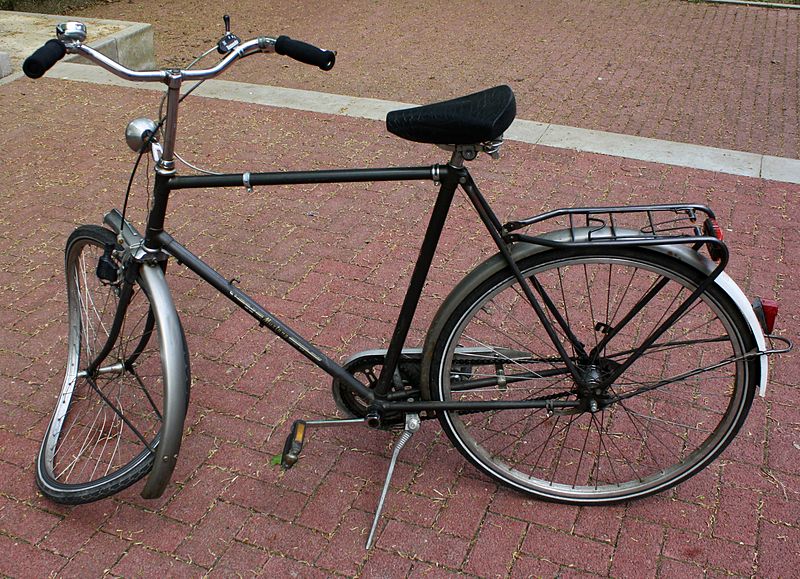
The State of Maryland’s first-ever ordained female Episcopal Bishop is in the news over the holidays for all the wrong reasons.Heather Elizabeth Cook is the second-most-powerful officer in the Episcopal Diocese of Maryland. The diocese confirmed on Sunday that Cook was behind the wheel of a Subaru that sustained damage in a “massive impact” with 41-year-old custom bicycle builder Tom Palermo. Palermo was riding a bicycle when Cook’s vehicle collided with him.
Palermo was killed in the accident. Cook initially fled the scene, but returned about twenty minutes later to take responsibility for the accident. The diocese insisted that since Cook returned to the scene, the accident was not a “hit-and-run.”
Lora Peters, a cyclist who encountered Palermo after the crash, said Palermo was still alive when she found him. Peters said Cook may have been able to help Palermo or to call for help if she had remained on the scene. A local biking advocacy group, Bikemore, released a statement alleging that “the driver of the car involved initially fled the scene, leaving Tom to die on the street.”
Cook has not released any public statements about the accident, however the Episcopal Diocese has revealed that she has been suspended from her post because she may be facing criminal charges related to the accident.
Charlotte Personal Injury Attorney Matthew R. Arnold of Arnold & Smith, PLLC answers the question “What can you sue for in a personal injury case?”
Madison County, Illinois accounts for .08-percent of the nation’s population, but the tiny county just east of the Mississippi River accounts for 25-percent of asbestos lawsuits in the United States.
Critics allege that personal injury attorneys have had “cozy relationships with Madison County judges,” which has turned Illinois into “a haven for frivolous lawsuits.”
The Madison Record has reported that 90-percent of plaintiffs who file asbestos-related lawsuits in Madison County do not live or work in the county. On a recent day, 181 asbestos-related lawsuits were set for trial. Only one of the plaintiffs named in the lawsuits lived in Madison County.
The Record reports that “in one memorable instance,” a judge was given $30,000 in campaign funds by asbestos law firms a few days after the judge gave the firms coveted trial dates for upcoming court sessions.
Personal injury lawyers and their allies stepped up their game during the Illinois legislature’s recent fall “veto session,” a session controlled by a lame-duck legislature taking action on vetoes issued by a lame-duck Governor. Governor-elect Bruce Rauner has promised to make lawsuit reform a top priority when he takes office next year.
Charlotte Personal Injury Attorney Matthew R. Arnold of Arnold & Smith, PLLC answers the question “Can I wait a few months to pursue a personal injury claim?”
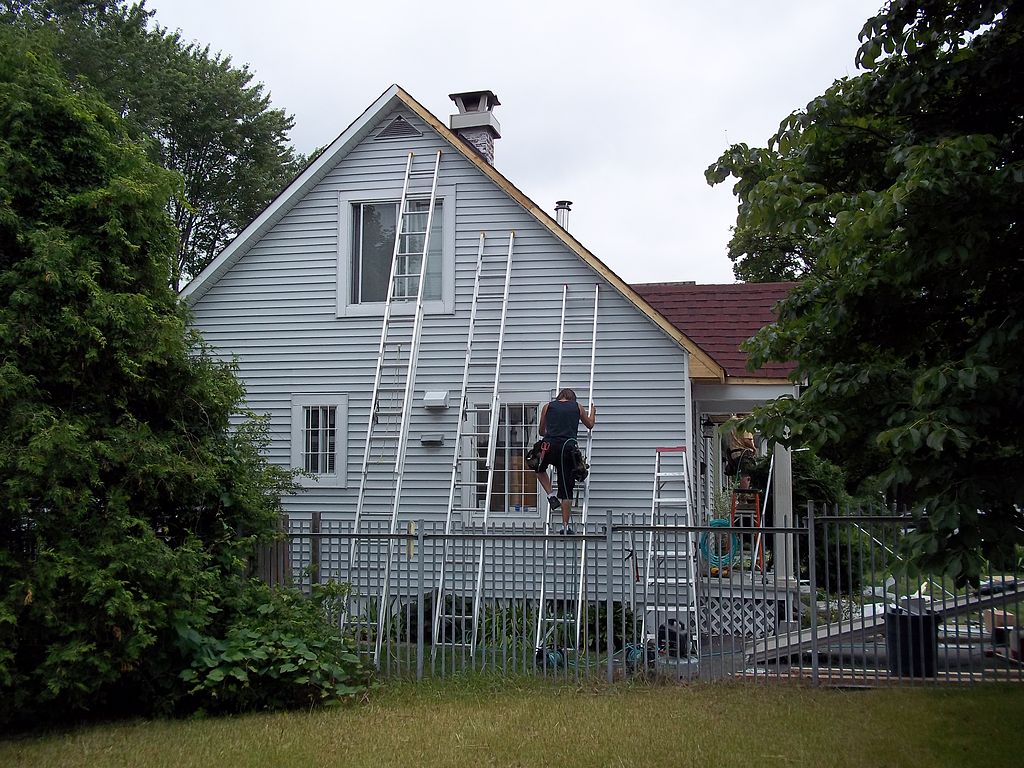
Six years ago, Kurt Stuhlmacher had just begun to put together rafters on the roof a cabin he was building for his parents. He later testified—in a lawsuit he brought against Home Depot and Tricam Industries—that the ladder he was standing on “just, like, fell out—fell this way out from underneath me to the left.”
Stuhlmacher could not see whether the ladder split before or after his fall, because he tried to hold onto the rafter as it gave way beneath him. That distinction—when the ladder split—ended up breaking Stuhlmacher’s case.
His expert—Dr. Thomas Conry, who has a doctorate in mechanical engineering—testified that the ladder’s splitting was “underway” at the time of Stuhlmacher’s fall, but he could not tell whether the ladder split before, at the same time or a fraction-of-a-second after the fall. Dr. Conry concluded that the ladder’s “material had that crack in it and the bracket under the load was prying that rivet through.”
Magistrate Judge Andrew P. Rodovich struck Dr. Conry’s testimony, finding that the doctor’s explanation of the ladder’s failure could not be reconciled with Stuhlmacher’s testimony that the ladder suddenly shot out beneath him to the left. Without Dr. Conry’s testimony, Stuhlmacher’s case lacked crucial evidence that Home Depot and Tricam—Tricam was the ladder’s manufacturer—caused Stuhlmacher’s injuries.
Charlotte Personal Injury Attorney Matthew R. Arnold of Arnold & Smith, PLLC answers the question “What if a loved one dies from the injuries sustained in a serious accident while the case is pending?”
If you have imbibed, over the holidays, a little too much of the alcohol-spiked eggnog, you should think twice before handing the keys over to your teenage child or relative to run out for supplies or snacks.
One Pennsylvania father has learned that the hard way.
Michael Ware initially told investigators that his 15-year-old daughter had taken his Sports-Utility Vehicle out for a drive without his permission. Authorities later learned, however, that Mr. Ware allowed his daughter—who did not have a driver’s license at the time—to drive his 2001 Chevrolet Suburban to a nearby barbecue restaurant.
Ware even walked his daughter and her three friends out to the car and asked them to bring him back a sandwich as they pulled away. A short time later, the daughter wrecked the Suburban, killing friends Cullen Keffer, Shamus Digney and Ryan Lesher. All three boys were just fifteen-years-old.
A witness to the accident said she could hear the boys crying out for the daughter to slow down before speeding around a sharp curve. The vehicle flipped, ejecting two boys from the vehicle and pinning a third beneath it. One of the boys passed away on the scene; two more passed away at a nearby hospital.
Charlotte Personal Injury Attorney Matthew R. Arnold of Arnold & Smith, PLLC answers the question “What if a loved one dies from the injuries sustained in a serious accident while the case is pending?”
Loretta MacPherson underwent successful brain surgery at Swedish Medical Center in Seattle last month. During her recovery from surgery, she sought out medication advice at a local hospital near her Oregon home.
Two days later, she was dead.
Michael Boileau, the chief clinical officer at St. Charles Medical Center in Bend, Oregon, said that medical staff had ordered the correct medication for Ms. MacPherson—Fosphenytoin, a drug intended to ward off seizures caused by brain surgery—and the Fosphenytoin had been delivered to the medical center.
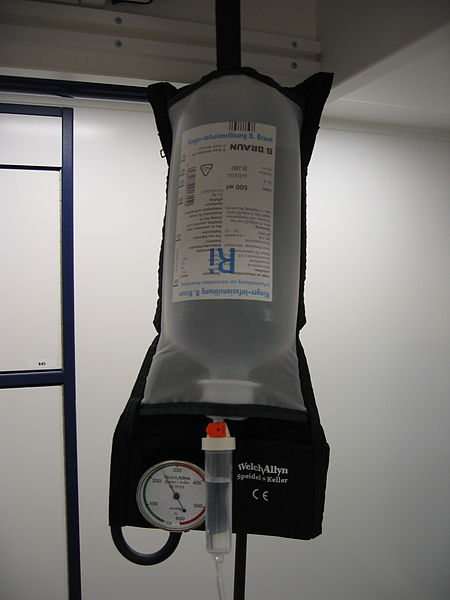
However, an internal investigation at the hospital showed that a pharmacy worker had filled a bag for intravenous injection marked “Fosphenytoin” with another drug, Rocuronium. Rocuronium is a potentially paralyzing muscle relaxant used to sedate and stabilize patients during surgery.
After being administered the wrong medication, Ms. MacPherson suffered cardiac arrest and stopped breathing. Doctors advised her son, Mark, that she had suffered irreversible brain damage. Ms. MacPherson was taken off life support and passed away two days after she entered the medical center.
Charlotte Personal Injury Attorney Matthew R. Arnold of Arnold & Smith, PLLC answers the question ” If an incident report was filled out, do I have a right to receive a copy?”
“At some point, something told me, grab a Big Mac.”
Those words—and that decision—would forever change the lives of two New York men. Officer John Florio was on duty and in uniform when he pulled into a Bronx, New York McDonald’s drive-thru late one evening in January 2005. Florio ordered a Big Mac, but when he bit into the patty he discovered he’d been served something he hadn’t ordered: shards of broken glass mixed into the sandwich’s “special sauce.”
A short time later, two inspectors, two captains, three sergeants and five detectives arrived at the McDonald’s to investigate, searching the kitchen and interviewing workers.
They ushered then-18-year-old McDonald’s worker Albert Garcia to a back room, where he admitted to “giving Florio something extra in his order.” In a statement he wrote for investigators, Garcia said he “put the little pieces of glass into the burger as a joke.”
By the time—five years later—Garcia’s criminal case came on for trial, Garcia had recanted and his lawyer—Raymond J. Aab—accused Officer Florio of planting the glass in the burger himself in order to obtain some quick settlement cash from the fast-food chain. Within two weeks of the incident, Florio sued McDonald’s asking for $6 million in damages.
 Charlotte Injury Lawyers Blog