 Charlotte Injury Lawyers Blog


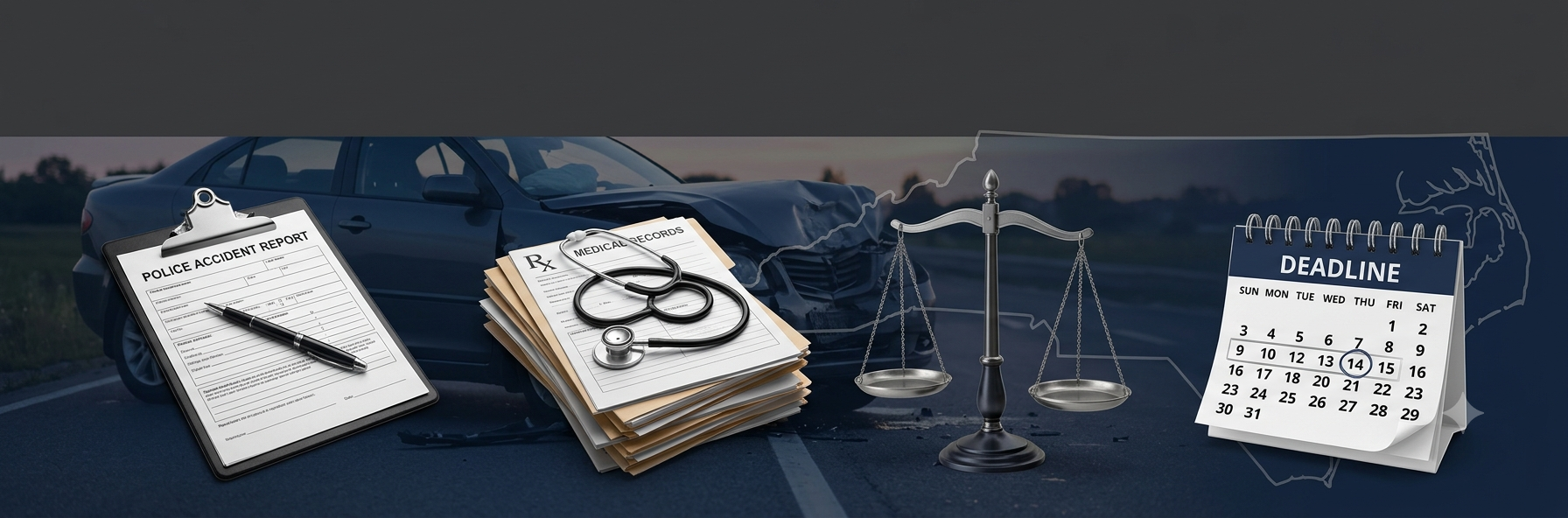 Accidents happen very quickly, but in that instant, your whole life may change. When someone gets hurt in an accident, they often assume that their expenses will be paid by the insurance company. In reality, it isn’t always that easy. Insurance companies scrutinize claims very closely and often either provide compensation that is low or deny a claim completely. If you or a loved one was hurt in an accident, you need to understand whether you have a valid personal injury case and how to proceed with your claim.
Who is at Fault for the Accident?
The person or persons who are at fault for the accident should be held accountable. In order to file a lawsuit, you must first determine who is responsible. Generally, insurance companies review the details of the accident to ascribe fault to each party that was involved. Follow the guidelines provided by the North Carolina Department of Insurance. You will want to make certain to call the police to file a report and gather as much information about the accident as possible. Photos, videos, and witnesses, among other things, are important aspects of proving fault in a personal injury case.
Did I Suffer Injuries?
It makes sense that in order to seek damages in a personal injury claim, you must have actual injuries. The injuries must have occurred as a direct result of the accident. Proving injuries can sometimes be challenging. It is best to seek medical treatment as soon after the accident as possible. Be sure to tell the doctor the reason for your visit. If you wait to get medical care, it becomes harder to show that the accident caused your injuries. Be sure to keep medical reports and bills.
Was I Partly At Fault?
North Carolina has strict laws pertaining to personal injury claims. A person cannot get compensation for a claim if they were even partially at fault. This is called contributory negligence. In our state, you are not allowed to get money for your injuries if you have any portion of fault. For example, if the other party was found to be 90% at fault but ascribed 10% fault to you, the law precludes you from seeking damages.
Has the Statute of Limitations Expired?
The law requires that personal injury cases be brought in a timely manner. This is to ensure that both parties will have access to the evidence and proof necessary for the case. In North Carolina, the statute of limitations to file a personal injury case is three years from the date of injury. It is important to keep in mind that the sooner you file a claim, the better, because your attorney will be able to obtain the documentation and evidence needed to prove your claim. If you wait more than three years, generally, you will not be able to make a claim.
Personal injury claims depend on a wide variety of factors. You will want to discuss the details of your injury with a knowledgeable attorney to determine your options. You do not want to lose out on compensation you deserve. Contact our legal team today at Arnold & Smith, PLLC, at (704) 370-2828 to request a free initial consultation.

The skilled personal injury attorneys at Arnold & Smith, PLLC are dedicated to maximizing the financial recovery and obtaining justice for every personal injury client injured by another party’s negligence. The issues our personal injury clients may be facing include, but are not limited to, slip and fall injuries, wrongful death, product liability, catastrophic injuries, dog bite claims, car and truck accident injuries, motorcycle injuries, traumatic brain injury (TBI), nursing home negligence, spinal cord injury and boating accidents. Our personal injury attorneys understand the devastating impact such an injury can have on a person’s life, and that the effects so often go beyond physical pain and suffering. The personal injury attorneys at Arnold & Smith, PLLC are dedicated to helping clients determine the strength of their claims, and to aggressively pursuing the means necessary to achieve the best possible end result for each client’s particular situation.
Source:
https://www.ncdoi.gov/consumers/auto-and-vehicle-insurance/after-accident
https://www.ncleg.net/enactedlegislation/statutes/html/bysection/chapter_1/gs_1-52.html
See Our Related Video from our YouTube channel:
https://www.youtube.com/user/ArnoldSmithPLLC/videos
See Our Related Blog Posts:
What Does Negligence Mean in a Personal Injury Claim?
What is Contributory Negligence in Personal Injury Cases?