 Charlotte Injury Lawyers Blog


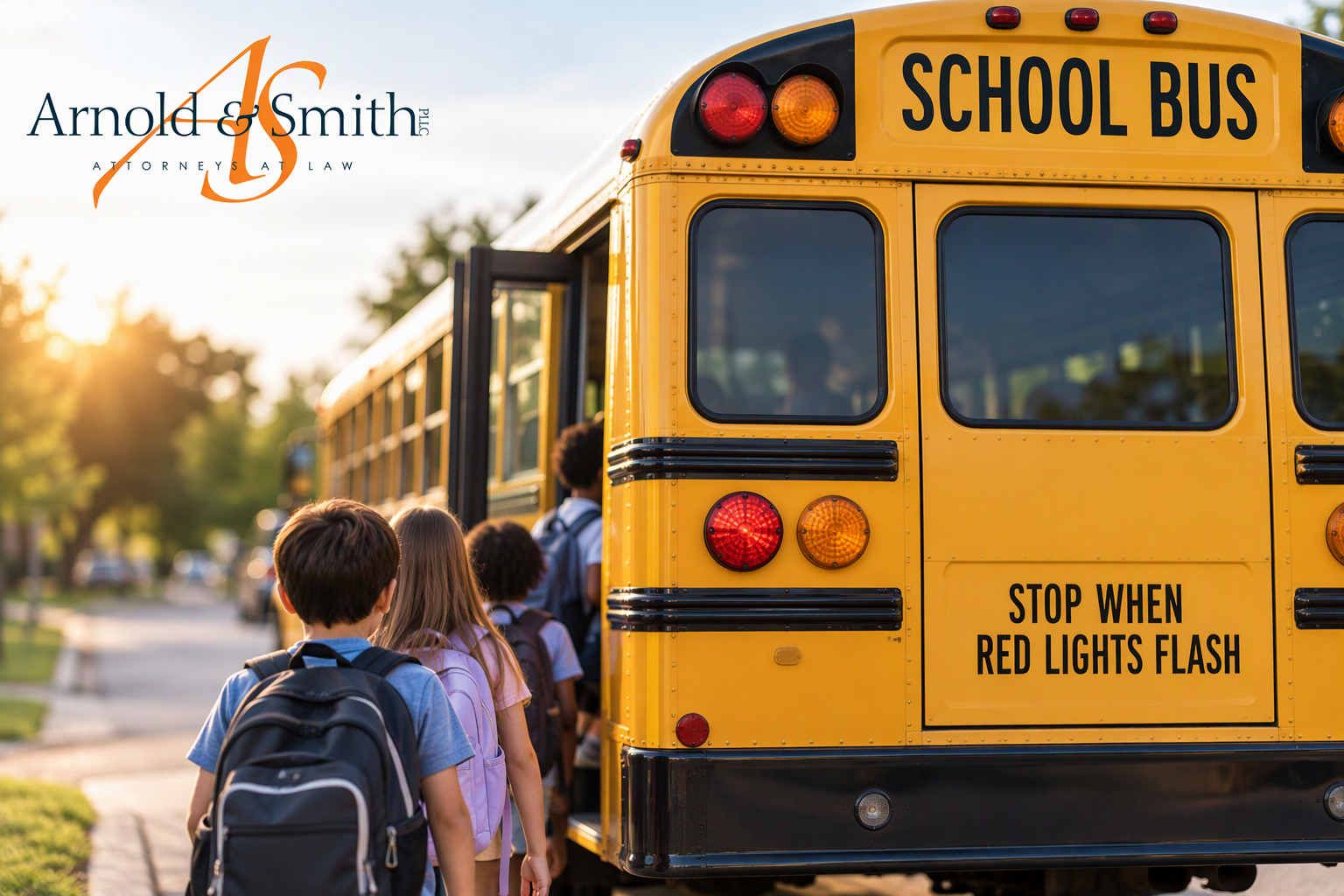 Why Don’t School Buses Have Seat Belts in North Carolina?
As a parent, you do everything possible to protect your children from harm. When you send them off to school, you expect that their trip will be safe and your child will return home at the end of the day. Unfortunately, that is not always the case. While school buses are generally safe, they are involved in more than 1,000 accidents a year in North Carolina. Parents are often concerned about children riding in school buses and wonder why these vehicles are not equipped with seat belts.
School Bus Safety Laws
School bus safety is a concern among parents and legislators alike. There are various laws that are designed to help protect school buses. For example, drivers cannot pass a stopped school bus that is dropping off students. School buses are painted bright yellow to ensure they are highly visible to other drivers. There are also laws regulating bus drivers. However, the law does not require large buses, such as most school buses, to have seat belts. This is because large buses utilize a system of safety called compartmentalization.
What is Compartmentalization?
Compartmentalization is a type of safety system that applies to large buses, such as school buses. It is a design that uses high-backed seats that are spaced closely to each other. The seats are padded to absorb impacts and protect passengers in case of an accident. Seat padding coupled with seat proximity offers a zone of protection, particularly for sudden stops and front accidents. However, there is less protection for passengers during side impacts or rollover crashes.
What Does Federal Law Say About School Bus Seatbelts?
The National Highway Traffic Safety Administration (NHTSA) requires seat belts only on small-sized buses, 10,000 pounds or less. Large school buses have a different weight distribution, so an impact with a smaller vehicle does not affect passengers in the same way. The NHTSA notes that seat belts could hinder passenger evacuation in an accident. They do not recommend retrofitting older buses with seat belts. Although federal law does not require seat belts, states may choose to enact bus seat belt legislation.
Who is Liable For A School Bus Crash?
There are many factors that you need to consider when you determine liability in any type of accident. In the case of school bus crashes, there may be several possible parties who might be negligent. The bus operating company, bus driver, bus manufacturer, school district, or the other driver could have some liability, depending on the circumstances. If your child sustained injuries in a school bus accident, you may be owed compensation for your damages. Damages may include medical bills, costs for ongoing treatment, and money for pain and suffering. If a child suffered a permanent disability, they could also be owed compensation for loss of consortium.
If your loved one was hurt in a school bus accident, don’t delay. The law limits the time to file a claim. Contact us today at Arnold & Smith, PLLC, at (704) 370-2828 to request a free initial consultation to review your case.

Injured because of someone else’s negligence?
Source:
https://www.ncleg.gov/EnactedLegislation/Statutes/HTML/BySection/Chapter_20/GS_20-217.html
See Our Related Video from our YouTube channel:
https://www.youtube.com/user/ArnoldSmithPLLC/videos
See Our Related Blog Posts:
Recent Chattanooga Bus Crash Highlights State’s Personal Injury Award Limits
Children Suffer Injuries in School Bus Crash